
Passing Through the Village of Seaweed and Straw Crafts: Exploring Tōkaidō Meisho: Ōmori from the Tōkaidō Meisho Fūkei Series
Date
In 1863 (Bunkyū 3), during the final years of the Edo period, 16 leading ukiyo-e artists and 25 publishers joined forces to produce the collaborative print series Tōkaidō Meisho Fūkei (Famous Views of the Tōkaidō, also known as the Procession Tōkaidō). Bringing together an all-star lineup—including Utagawa Toyokuni III (Kunisada), Tsukioka Yoshitoshi, Ochiai Yoshiiku, Kawanabe Kyōsai, and Utagawa Hiroshige II—this monumental series spanned over 160 prints and caused a sensation in Edo.
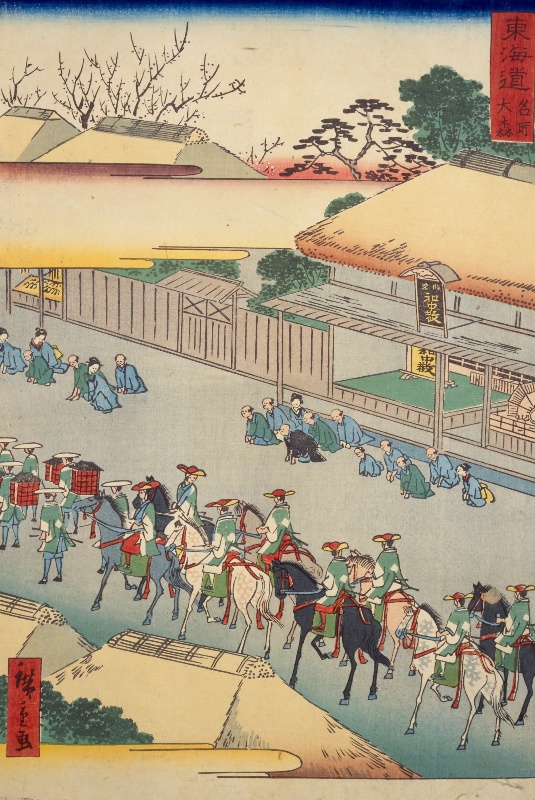
In this post, we focus on Tōkaidō Meisho: Ōmori, which depicts an ai-no-shuku (intermediate rest stop) nestled between Shinagawa-juku and Kawasaki-juku, exploring the history of Edo-period Ōmori and the highlights of the print.
What Kind of Place Was “Ōmori” in the Edo Period?
Located around today’s Ōmori area in Ōta Ward, Tokyo, Ōmori flourished during the Edo period as an ai-no-shuku—a designated rest area situated between official post stations of the Fifty-three Stations of the Tōkaidō.
A Roadside Rest Stop Lined with Famous Local Specialties
Positioned at just the right distance for travelers to take a breather after leaving Shinagawa, Ōmori bustled with foot traffic. Two local products in particular—Ōmori nori (seaweed) and mugiwarazaiku (colorful straw-marquetry crafts)—were famous nationwide as Edo souvenirs, and teahouses and souvenir shops selling them lined the highway.
A Scenic Coastline of Sea and Pines
At the time, Edo Bay (modern-day Tokyo Bay) lapped right up against Ōmori. Brushwood stakes (hibi) used for cultivating seaweed stood across the tidal flats, creating a distinctive coastal landscape unique to Edo.
Highlights of Tōkaidō Meisho: Ōmori
Conceived against the backdrop of the 14th shogun Tokugawa Iemochi’s historic journey to Kyoto (the first shogunal procession to Kyoto in 229 years), the Tōkaidō Meisho Fūkei series avoided shogunate censorship by depicting the excitement of the era through grand feudal processions and lively travel scenes rather than showing the shogun directly.
Tōkaidō Meisho: Ōmori skillfully blends the local character of Ōmori with the electric mood of late-Edo Japan:
Processions on the Highway and Lively Roadside Scenes
The print captures an orderly procession advancing along the pine-lined Tōkaidō, framed by teahouses and travelers watching from the roadside. The contrast between the formal dignity of the retinue and the warm, everyday bustle of an intermediate rest stop gives the composition remarkable depth.
Local Specialties and Edo Chic in the Koma-e Inset
A signature feature of the series is the koma-e—a framed inset illustration typically placed in the upper section of the print. In this work, the inset highlights scenes synonymous with Ōmori, such as seaweed harvesting, the beloved mugiwarazaiku straw crafts, or serene coastal views. Viewed alongside the procession below, it offers a multi-dimensional glimpse into the pleasures travelers enjoyed when stopping in Ōmori.
The Thrill of 16 Master Artists Competing in Tōkaidō Meisho Fūkei
The greatest appeal of Tōkaidō Meisho Fūkei lies in watching each artist’s distinct personality shine on the shared stage of the Tōkaidō highway:
Utagawa Toyokuni III’s glamorous, dignified portrayal of figures
Tsukioka Yoshitoshi and Ochiai Yoshiiku’s dramatic, dynamic late-Edo compositions
Kawanabe Kyōsai’s humor and unmatched, expressive brushwork
Bringing together established veterans and rising stars alike, the series cast an attentive eye even on smaller waystations like Ōmori, vividly preserving the rich daily life and culture of Edo’s outskirts.
Although modern Ōmori has transformed into an urban neighborhood of office buildings and residences, gazing at Tōkaidō Meisho: Ōmori brings back the salty breeze of the coastline and the lively sight of travelers browsing colorful straw crafts. Available online through digital archives such as the National Diet Library Digital Collections, it is well worth exploring up close as if stepping into the shoes of an Edo-period traveler.