
A Clearing Sky and the Lingering Scent of Rain: The Allure of Kobayashi Kiyochika’s Masterpiece “Clearing After Rain at Kawaguchi Zenkoji Temple”
Date
Kobayashi Kiyochika, known as the “last ukiyo-e master” and a pioneer of dramatic light and shadow, captured the early Meiji-era landscape of Tokyo and its surroundings with unprecedented skill.
While he is widely celebrated for his striking night scenes and twilight views, his works capturing fleeting atmospheric shifts—such as the changing weather—are equally breathtaking. In this post, we explore one of his finest landscape masterpieces: “Clearing After Rain at Kawaguchi Zenkoji Temple” (Kawaguchi Zenkoji Amabare).
1. What is “Clearing After Rain at Kawaguchi Zenkoji Temple”?
Artist: Kobayashi Kiyochika
Year of Publication: 1879 (Meiji 12)
Format: Oban-size landscape nishiki-e (multi-color woodblock print)
Publisher: Fukuda Kumajiro
Subject: The grounds near the Kawaguchi Zenkoji Temple, situated along the crossing of the Sumida and Arakawa river basins (in present-day Kawaguchi, Saitama Prefecture).
(Note: “Amabare” refers to the weather clearing up after a rain shower, or the transient moment when rain and sunlight coexist.)
2. Key Highlights: The Exquisite Contrast of a Clearing Sky
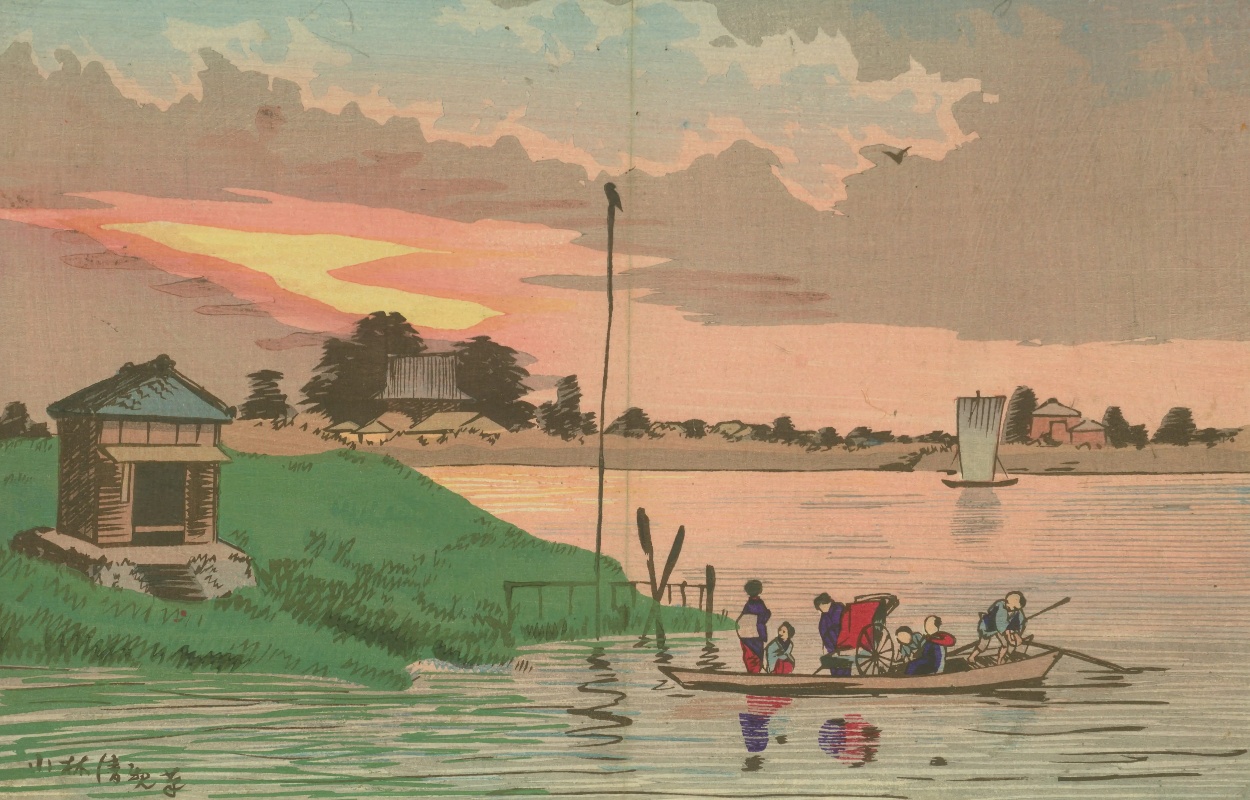
A Dramatic Sky and Luminous Light: The composition is anchored by a stunning gradient of a sky that has just finished raining, suddenly pierced by bright, emerging sunlight or the warm glow of the setting sun. Showcasing Kiyochika’s signature “Kosen-ga” (ray-of-light) technique, beams of light break through the clouds to vividly illuminate the river surface and grassy banks.
The Bustling Life of the “Kawaguchi Crossing”: The print depicts a ferry crossing the river, carrying travelers along with a jinrikisha—the cutting-edge transport of the era. Across the embankment, the heavy-roofed main hall of Kawaguchi Zenkoji stands in quiet solemnity.
Coexistence of Humidity and Openness: The humid, damp atmosphere of a post-rain landscape—the moisture clinging to the earth and plants, and the puddles reflecting the light—is captured using traditional woodblock bokashi (color gradation) techniques. The sensation of heavy storm clouds receding and the horizon opening up creates a simultaneous feeling of crisp refreshment and serene melancholy.
3. The Footsteps of Civilization and Timeless Japanese Scenery
The year 1879 was a time when Tokyo and its neighboring regions were accelerating rapidly toward modernization.
By depicting Kawaguchi, a riverside area just outside the bustling heart of the metropolis, Kiyochika blended Western-style perspective and light with a timeless, classic Japanese rural waterfront. The inclusion of a modern jinrikisha alongside an ancient temple and the raw power of nature encapsulates the genuine, transitional air of the Meiji period.
Summary
Kobayashi Kiyochika’s Clearing After Rain at Kawaguchi Zenkoji Temple is an under-appreciated masterpiece that poetically preserves the beauty of post-rain sunlight and the everyday drama of river travelers.
Admiring the gradients of light and air crafted by master woodblock carvers and printers makes you feel as though you are standing by a 140-year-old Meiji riverbank, breathing in the fresh breeze. Be sure to look closely at its fine details next time you encounter this print!
Would you like to explore more of Kiyochika’s atmospheric weather and waterfront prints?