
The Contrast of Torrential Rain and Silence: The Allure of Kobayashi Kiyochika’s Masterpiece “Umewaka Shrine”
Date
Kobayashi Kiyochika, known as the “last ukiyo-e master,” vividly captured Meiji-era Tokyo through his brilliant handling of light and shadow. While he is widely celebrated for his nocturnal and twilight “Kosen-ga” (ray-of-light pictures), his exceptional ability to depict atmospheric weather conditions is equally remarkable.
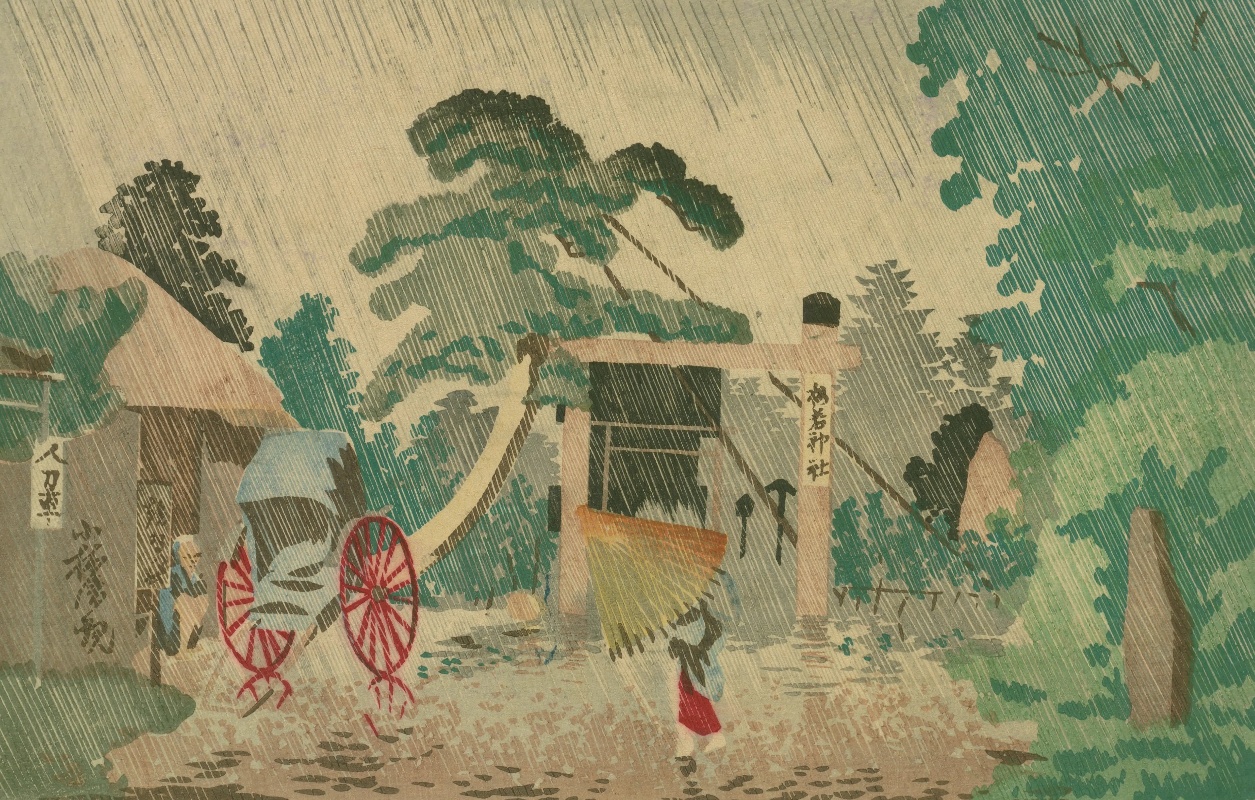
In this post, we explore “Umewaka Shrine” (Umewaka Jinja), a stunning masterpiece that captures a torrential downpour with breathtaking expressive power!
1. What is “Umewaka Shrine”?
Artist: Kobayashi Kiyochika
Year of Publication: Circa 1880 (Meiji 13)
Format: Oban-size nishiki-e (multi-color woodblock print)
Subject: The grounds of Umewaka Shrine (now known as Mokuboji Temple), located near the Sumida River in Tokyo.
(Note: The shrine was temporarily renamed “Umewaka Shrine” due to the Meiji government’s Shinto-Buddhism separation policies before later reverting to its historical name, Mokuboji. It is a famous historic site long known as the tragic setting of the traditional Noh play “Umewakamaru”.)
2. Key Highlights: The Masterful Carving and Printing of “Rain”
The defining feature of Umewaka Shrine is its compelling depiction of a driving rainstorm sweeping across the entire composition.
Fierce Rain Rendered in Negative Lines: The driving rain cuts sharply and diagonally across the scene. Rather than simple dark strokes, the rain is meticulously carved as fine white-line highlights through advanced woodblock printing techniques. The stark contrast between the heavy, cloud-darkened sky and the relentless downpour creates an extraordinary sense of realism.
A Human Narrative Amid the Storm: In the foreground, a man carrying an umbrella waits out the sudden squall beside a jinrikisha. The juxtaposition between the tranquil, timeless shrine gates and a modern Meiji commuter stranded by the weather adds a narrative, emotional depth to the scene.
Pioneering Techniques Beyond Tradition: Kiyochika’s bold approach—avoiding heavy black outline blocks and capturing atmospheric and meteorological shifts across the entire frame—paved the way for the later “Shin-Hanga” (new print) masters of the Taisho and Showa eras, such as Kawase Hasui.
3. Capturing the “Air” of Nature
While incorporating Western-style linear perspective and chiaroscuro, Kiyochika maximized the subtle gradations (bokashi) and printing nuances native to traditional Japanese woodblock art.
His true genius lies not just in depicting bright sunshine, but in making the viewer physically feel the humid air and cold sound of a stormy day. Amidst a rapidly modernizing Tokyo, Kiyochika preserved a timeless slice of traditional Japan by setting his storm against the quiet backdrop of a legendary shrine.
Summary
Kobayashi Kiyochika’s Umewaka Shrine is an underrated masterpiece that poetically fuses the raw power of nature with human vulnerability during a sudden downpour.
When you look closely at the exquisite carving and printing techniques used to render the rain, it feels as though the cool, damp air of a 140-year-old Meiji afternoon is drifting right off the page. Be sure to examine the intricate details next time you encounter this print!
Would you like to explore more of Kiyochika’s weather-themed landscapes, such as his depictions of snow or other rainy days?