
Capturing the Spark of Life: The Allure of Kobayashi Kiyochika’s “Rooster”
Date
Best known as the “last ukiyo-e master” who captivated an era with his dramatic play of light and shadow, Kobayashi Kiyochika is world-renowned for his “Kosen-ga” (ray-of-light landscape prints) depicting Meiji-era Tokyo. However, his extraordinary talents extended far beyond landscapes—his depictions of flora, fauna, and animals are equally remarkable masterpieces.
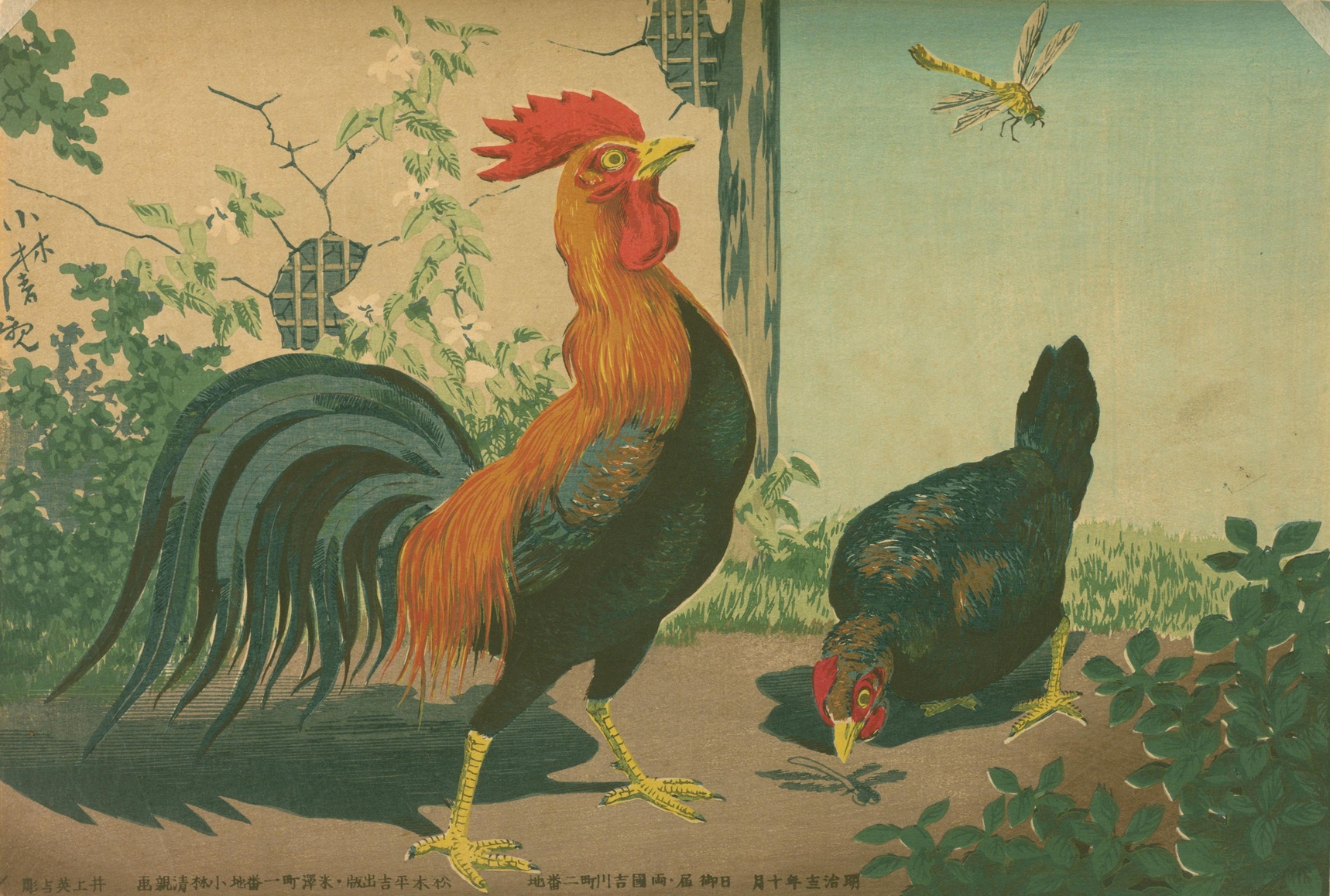
In this post, we will explore one of his finest bird-and-flower (Kacho-ga) works, “Rooster” (Tori / Niwatori to Tonbo), which shines a spotlight on Kiyochika’s keen eye for observation and masterly realism!
1. What is “Rooster”?
Artist: Kobayashi Kiyochika
Year of Publication: Circa 1880 (Meiji 13)
Format: Oban-size nishiki-e (multi-color woodblock print)
Subject: Rooster / Rooster and Dragonfly
Created during the peak of his landscape popularity, this print is part of Kiyochika’s bird-and-flower series featuring everyday creatures. It vividly captures the authentic presence and spontaneous movements of a rooster and hen in a natural setting.
2. Key Highlights: Kiyochika’s Realism and Keen Observation
Traditional ukiyo-e bird-and-flower prints often emphasized stylized patterns, symbolism, and decorative elegance. Kiyochika’s Rooster, on the other hand, strongly reflects the influence of Western-style life sketching (shasei) and naturalism.
Textural Depth of Feathers: The glossy tail feathers of the rooster, the soft downy plumage, and the bright, fleshy red comb are rendered with remarkable three-dimensionality that defies the boundaries of woodblock printing. Through delicate color layering and gradations (bokashi), Kiyochika conveys the warmth and vitality of a living creature.
Catching a Split-Second Motion: Whether depicted cocking its head with a sharp glance toward a hovering dragonfly or poising itself to peck at something on the ground, the bird’s sudden movements are captured with striking vitality. This candid, snapshot-like quality highlights Kiyochika’s remarkable photographic observation.
Modern Composition with Negative Space: The clever use of empty space leaves room for the subject to take center stage, creating a crisp, stylish layout. The print showcases the painterly maturity Kiyochika honed in his landscape work, making it far more than a simple zoological illustration.
3. Beyond Landscapes: The Versatility of Kiyochika
While Kiyochika skyrocketed to fame through his “Kosen-ga” landscapes of gaslit streets and moonlit rivers, his true strength lay in “observing subjects as they were and capturing their very breath.”
During the early Meiji period—an era defined by the influx of Western culture and techniques—Kiyochika seamlessly blended traditional Japanese sensibilities with Western realism. Rooster stands as a glowing testament to his flexible, inquisitive artistic vision.
Summary
At first glance, Kobayashi Kiyochika’s Rooster may seem like a straightforward animal portrait, but a closer look reveals overwhelming realism and vitality—from the fine details of individual feathers to the sharp glint in the bird’s eye.
By exploring his animal and bird-and-flower prints alongside his poetic Meiji cityscapes, we gain a deeper appreciation for Kiyochika’s incredible versatility and drafting skill as an artist. If you ever come across this print, be sure to take a moment to admire its dynamic sense of life!
Would you like to explore more of Kiyochika’s animal prints (such as his famous depictions of cats or songbirds)?