
The Poetry of a Meiji Summer Night: The Allure of Kobayashi Kiyochika’s Masterpiece “Imado Summer Moon”
Date
Kobayashi Kiyochika, celebrated as a master of “Kosen-ga” (ray-of-light pictures), is an ukiyo-e artist whose dramatic depictions of Meiji-era Tokyo continue to captivate fans today. By incorporating Western-style realism, linear perspective, and chiaroscuro into traditional woodblock printing, his works brought a fresh perspective to Japanese art.
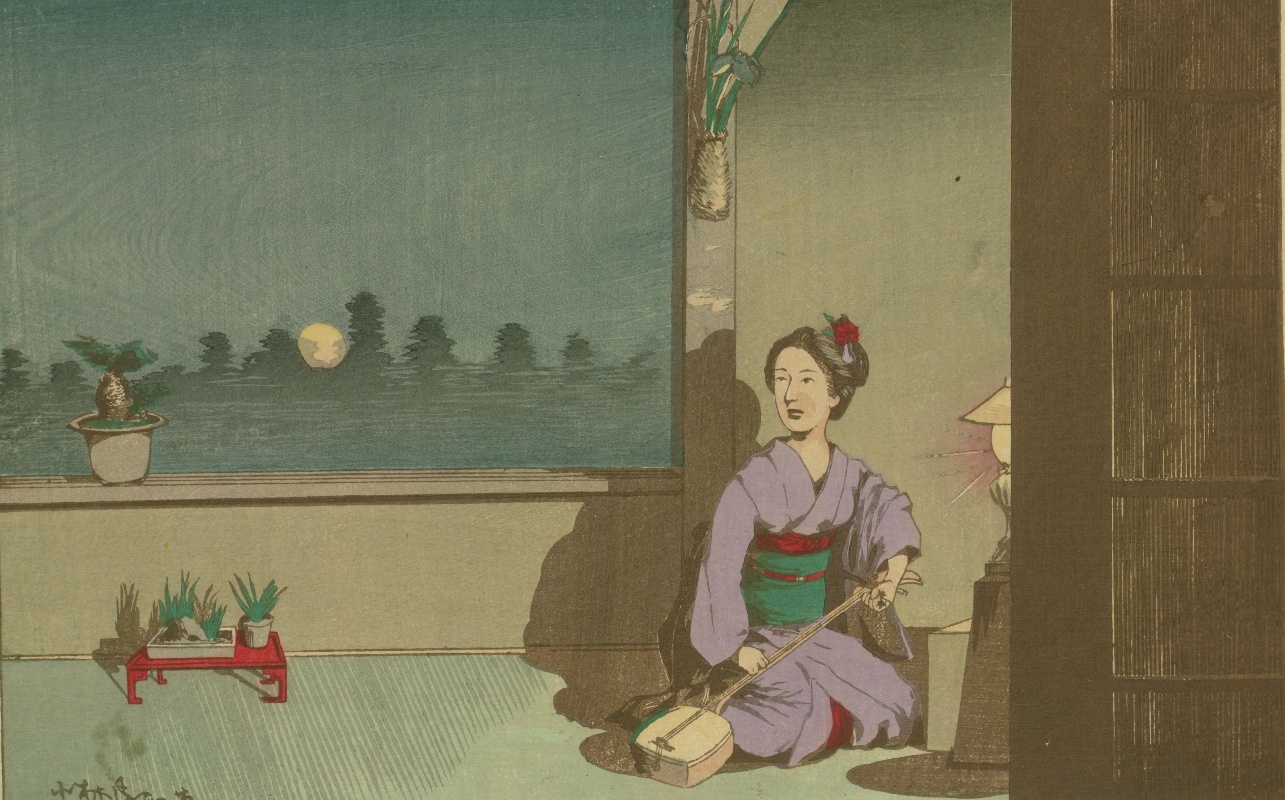
In this post, we will introduce a breathtaking masterpiece filled with the sentiment of a summer night: “Imado Summer Moon” (Imado Natsu no Tsuki), featured in the Kiyochika Gachou [3] collection.
1. What is “Imado Summer Moon”?
Artist: Kobayashi Kiyochika
Year of Publication: 1881 (Meiji 14)
Format: Oban-size nishiki-e (full-color woodblock print)
Set against the scenic backdrop of Imado (present-day Taito-ku, Tokyo) along the Sumida River—a charming downtown area known for its traditional culture—this work portrays a sultry summer night. It is a stunning piece where moonlight and artificial light delicately intertwine within a quiet, atmospheric setting.
2. Key Highlights: The Atmospheric Magic of Light and Shadow
Kiyochika’s signature “Kosen-ga” technique is on full display in Imado Summer Moon.
A Duet of Artificial and Natural Light: The composition captures a woman’s profile and hands gently illuminated by an indoor lamp or lantern. Just outside the window, a pale blue full moon peeks through the gaps in the trees, casting a natural glow over the scene. The exquisite balance between man-made warmth and natural moonlight is a major highlight.
A Tangible Sense of Atmosphere: The print depicts a woman tuning or preparing to play a shamisen while enjoying the cool summer breeze. It carries a profound sense of lyrical calm, almost making you feel as though you can hear a single, resonant shamisen string echoing through the still night air.
Masterful Shading and Depth: The subtle casting of shadows—across the woman’s profile, a narcissus plant, and bonsai trees indoors—demonstrates a distinctly Western-style approach. Departing from the flat compositions of traditional ukiyo-e, Kiyochika creates a three-dimensional, humid, and realistic night air.
3. The Nostalgia of “Imado” in Early Meiji
Imado, the setting of this print, was a scenic riverside district famous since the Edo period for its local pottery (Imado-yaki).
While Tokyo was rapidly modernizing and transforming in 1881, Kiyochika chose to capture not the hyper-modern cityscape, but the timeless beauty of a traditional Japanese summer night and the gentle, unhurried pace of the downtown community. For us living in a fast-paced modern world, this scene offers a deeply comforting sense of nostalgia.
Summary
Kobayashi Kiyochika’s Imado Summer Moon offers a different flavor from his dynamic urban landscapes, inviting viewers to experience a masterpiece defined by “silence and the dramatic beauty of light.”
With the warm glow of a lamp, the cool blue moonlight of a summer night, and the imagined quiet chime of a shamisen—when you flip through the pages of the Kiyochika Gachou, take a moment to immerse yourself in the serene breeze of a Meiji-era summer evening.