
Capturing Light and Shadow in Meiji Tokyo: The Allure of Kobayashi Kiyochika’s “Edo Bridge at Sunset with Mt. Fuji”
Date
Often called the “last ukiyo-e master” or the master of Meiji-era “Kosen-ga” (ray-of-light pictures), Kobayashi Kiyochika bridged the gap between traditional Japanese woodblock printing and modern Western realism. His works vividly capture the unique atmosphere of Tokyo as it raced toward modernization.
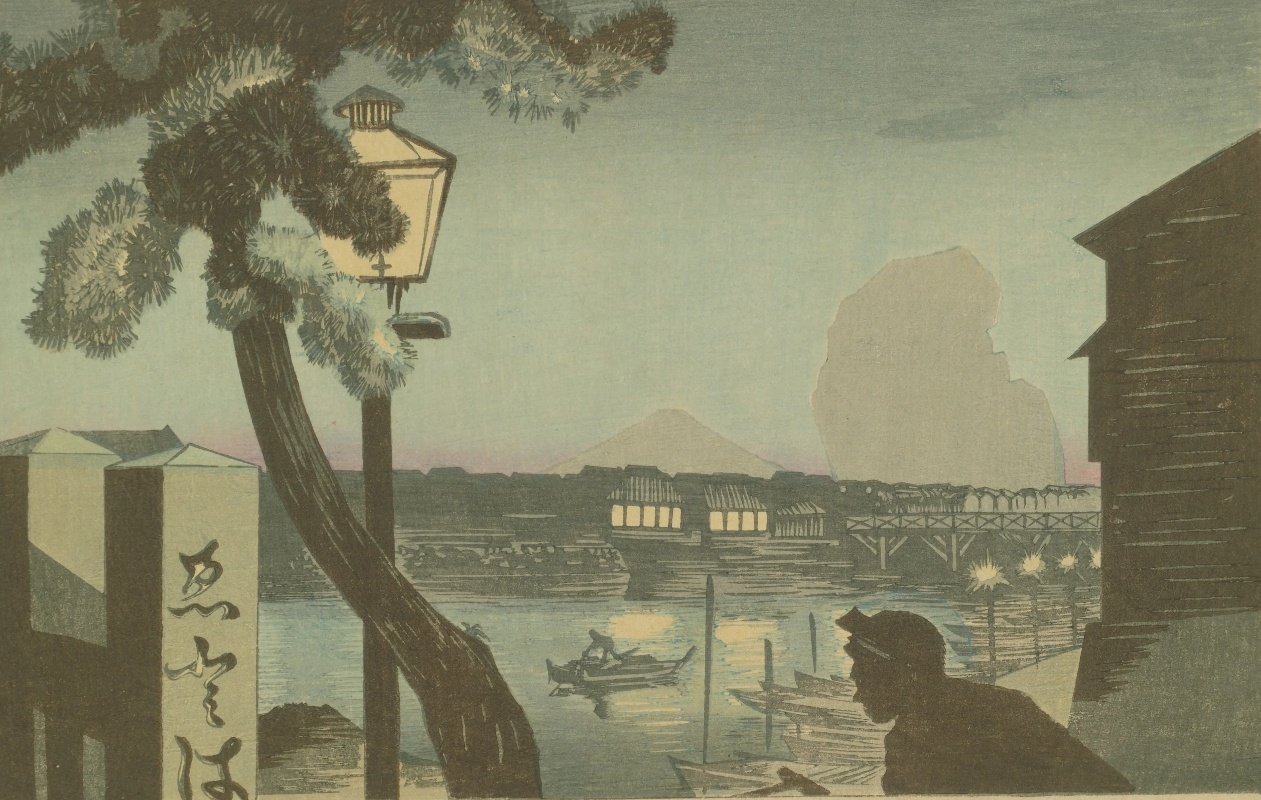
In this post, we will explore one of his most celebrated masterpieces, featured in the Kiyochika Gachou collection: “Edo Bridge at Sunset with Mt. Fuji” (Edo-bashi Yugure Fuji).
What is “Edo Bridge at Sunset with Mt. Fuji”?
Artist: Kobayashi Kiyochika
Year of Publication: 1879 (Meiji 12)
Format: Oban-size nishiki-e (full-color woodblock print, landscape orientation)
Publisher: Fukuda Kumajiro
This print depicts a breathtaking view of a dusk sky looking out from Edo Bridge (which crosses the Nihonbashi River in present-day Chuo-ku, Tokyo). It brilliantly merges the bustling everyday life of early Meiji Tokyo with the majestic, distant silhouette of Mt. Fuji.
Key Highlights: The Atmospheric Magic of “Kosen-ga”
Kiyochika’s true genius lies in his signature “Kosen-ga” style, which incorporated Western linear perspective and dramatic chiaroscuro (light and shadow).
The Gradients of Twilight: The entire composition is wrapped in the fleeting, melancholic colors of a setting sun. The delicate blend of fading reddish hues and deepening twilight blues makes you feel the crisp evening air and stillness of the scene.
A Striking Juxtaposition: Against a backdrop of a transitioning urban landscape and a busy bridge, Mt. Fuji stands quietly yet powerfully in the distance. This contrast between the rapid modernization of Tokyo and the timeless, sacred symbol of Japan is striking.
Mastery of Light and Shadow: Rare for traditional ukiyo-e of the era, Kiyochika used Western-style shading to define his subjects. The silhouettes of the bridge structure and the pedestrians give the two-dimensional print remarkable depth and realism.
A Meiji Documentary: Like a Photograph in Woodblock
Around 1879, Tokyo was undergoing a radical transformation—gas streetlamps were being introduced, and Western-style brick buildings were emerging.
“Edo Bridge at Sunset with Mt. Fuji” is much more than a scenic landscape; it is a historical snapshot. It preserves the authentic atmosphere of a specific evening in a rapidly modernizing metropolis, making it feel less like a traditional print and more like a historical photograph or a cinematic still.
Pushing past the conventional boundaries of ukiyo-e, Kiyochika captured both the bold ambitions of a new era and a deep sense of Tokyo nostalgia.
Summary
Kobayashi Kiyochika’s Edo Bridge at Sunset with Mt. Fuji is a national treasure that brilliantly encapsulates the “light” and “shadow” of the dawn of the Meiji era.
If you ever get the chance to view this piece through collections like the Kiyochika Gachou, take a close look at the bustling activity on the bridge and the stoic, distant presence of Mt. Fuji. You will instantly feel as though you’ve time-traveled to the heart of 19th-century Tokyo!