
Modern Brilliance and the Splendor of Light: The Allure of Kobayashi Kiyochika’s “Fountain at the Fine Art Museum, Second National Industrial Exhibition”
Date
Kobayashi Kiyochika, known both as the “last ukiyo-e master” and a pioneer of the light-infused “Kosen-ga” (ray-of-light pictures) style, captured the rapid transition of Tokyo from the Edo period into the Meiji era with unmatched skill.
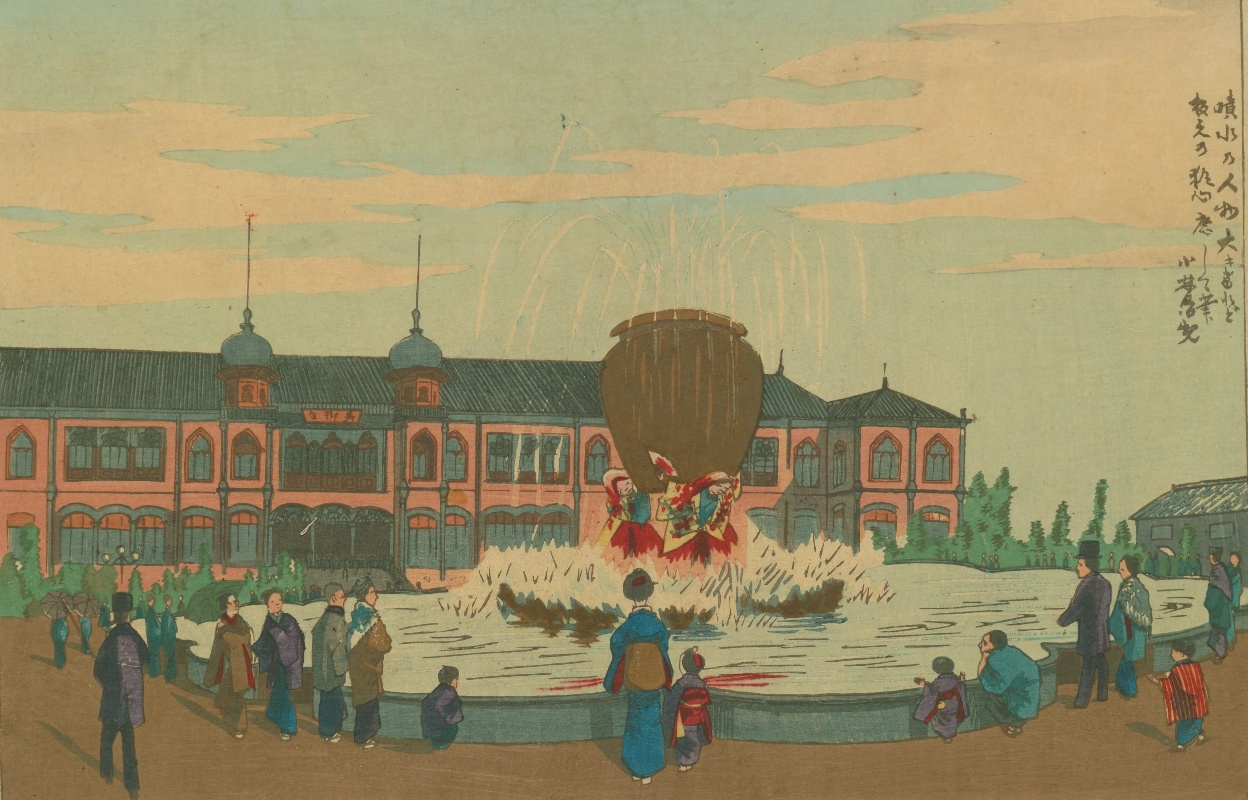
While many of his works depict everyday street scenes and peaceful waterways, “Fountain at the Fine Art Museum, Second National Industrial Exhibition” (Daini-kai Naikoku Kangyo Hakurankai Nai Bijutsukan Funsui) stands out as a vibrant celebration of Meiji Japan’s technological progress, Westernization, and modern spirit.
In this post, we explore this captivating masterpiece that brilliantly fuses the excitement of a modernizing nation with Kiyochika’s sophisticated mastery of light!
1. What is “Fountain at the Fine Art Museum…”?
Artist: Kobayashi Kiyochika
Year of Publication: 1881 (Meiji 14)
Format: Oban-size nishiki-e (full-color woodblock print)
Subject: The Second National Industrial Exhibition at Ueno Park, Tokyo
Held in 1881 in Ueno Park, the National Industrial Exhibition was a massive state-sponsored event designed by the Meiji government to showcase domestic manufacturing, technology, and art.
Kiyochika’s print highlights the grand courtyard of the newly built Fine Art Museum—designed by the famed British architect Josiah Conder—featuring a stylish, spurting fountain as its central attraction.
2. Key Highlights: Water, Light, and Western Architecture
The Drama of Glistening Water: The tall fountain bursting with water at the center of the print was a symbol of wonder and novelty for contemporary visitors. Utilizing Western-style shading and gradations (his signature Kosen-ga technique), Kiyochika renders the shimmering water droplets with extraordinary transparency and coolness.
A Tapestry of Meiji Fashion: The crowd gathered around the courtyard offers a fascinating glimpse into early Meiji society. Gentlemen in Western suits holding walking sticks mingle with women in traditional kimonos carrying Western umbrellas. The print vividly captures the excitement of people stepping out to experience the height of modern culture.
The Grandeur of Modern Architecture: Josiah Conder’s magnificent Western museum building anchors the background. The contrast between the rigid, linear structure of the architecture and the fluid, energetic arc of the fountain gives the print an expansive sense of depth and airiness.
3. A Visual Document of Meiji Optimism
While many of Kiyochika’s nocturnal Tokyo views evoke a gentle melancholy or nostalgia for the passing Edo era, this print is filled with vibrant energy, pride, and optimism for the future.
As Japan embraced Western technology and art during the Bunmei Kaika (Civilization and Enlightenment) movement, Kiyochika recorded this monumental transformation with artistic flair. More than a simple landscape, it serves as a valuable visual record capturing the hopeful spirit of the Meiji period.
Summary
Kobayashi Kiyochika’s Fountain at the Fine Art Museum, Second National Industrial Exhibition is a remarkable work where the energy of a nation taking its first steps toward modern statehood aligns perfectly with the brilliance of “Kosen-ga” techniques.
From the sparkle of the water to the eclectic fashions of the crowd and the grand facade of the museum, every corner of this print shines with the “light of Meiji.”
Would you like to explore more of Kiyochika’s prints depicting modern architecture or other Meiji-era exhibitions?